My Disability Diaries TBR

Have you been enjoying Disability Diaries?
There's been some downright awesome stuff going on, from discussions to rants to whatever it is I wrote last Saturday, but the recommendations are my absolute favourite right now. Literally just scrolling through the #DisabilityDiaries2017 hashtag has almost doubled the size of my TBR.

And, because I'm at least a little bit evil - uh, I mean ... because it's super important for everyone to read as many different representations of different disabilities as possible, I've made this post.

Because you want to grow your TBR at a ridiculous rate too, right?

RIGHT?

Highly Illogical Behaviour by John Corey Whatley

I'd heard of this one a couple of times before DD week, and frankly I was more than a little skeptical about it. The premise involves an MC trying to "cure" another MC of his agoraphobia - which sounds like a recipe for harmful representation to me.

But, according to Gerri @ Coralling Books, it's actually a surprisingly good interpretation, and I'm just fascinated to see how the author manages to turn what looks like a toxic stereotype into ... well, not a toxic stereotype. Also, I know very little about agoraphobia, and this needs to change. Between this book and the next one, I'm hoping I might get at least a basic view of it from a couple of different angles.

(Nice segway there, Lara. Real subtle.)

Under Rose Tainted Skies by Louise Gornell
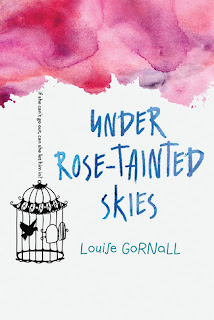
I've seen all kinds of rave reviews about this book over the last week, but I think the honour of convincing me to read it goes to Casey @ AdoptABookAus - apparently it involves a girl with agoraphobia and OCD who meets a guy? But his mere presence doesn't miraculously cure her?

Yes please and thank you. Count me in.

The really eye-opening mental health-related books I've read have been heartbreaking most of the time *cough* All The Bright Places *cough*, but that's because they told the truth, rather than wrapping up these issues in a blanket of "you'll-fall-in-love-and-it'll-all-be-okay". Whether or not I end up sobbing, it sounds like I'll have heard the truth from this book.

And that is kind of the point of Disability Diaries - to promote books that are honest about mental illness and disability and everything in between?

The Season of You and Me by Robin Constantine

This one comes from my lovely fellow co-host Angel (the linked post is her DD TBR, so have a look if you're looking for even more recs), and GAH I AM SO EXCITED TO READ IT. After the hella controversial Me Before You, which I read and became pretty upset by last week, I'm desperate for a book with a paraplegic character that a) doesn't perpetrate harmful stereotypes about disability being a worse fate than death, b) doesn't make me bawl my eyes out, and c) doesn't use my concern about representation and emotional investment against each other to make me feel ridiculously conflicted.

According to Goodreads, it's a fun summery read. I'm hoping it wasn't lying - although we all know I cry at everything, so I'm not about to put away the tissues.

Just. In. Case.

The Memory Wall by Lev A.C. Rosen

Another of my co-hosts, Jolien (who, I'd just like to point out, is just as lovely) wrote an absolutely gorgeous piece on dementia last Monday. I've been pretty busy this week with everything that's been going on, so I only just got round to reading it, and wow did it make me think.

This is one of the books Jolien mentioned, and other than the fact that I now have a minor obsession with learning AS MUCH AS HUMANLY POSSIBLE about dementia through literature, the premise really caught my attention. It's about a young boy who escapes his mother's slow loss of memory by playing a fantasy video game ... except he's convinced that she's playing with him from her nursing home. And refuses to believe that she's got dementia in the first place.

It sounds amazing (although I'm guessing I'll need the tissues for this one too) and also cover love. I can't wait to get around to it.

***
In the comments: Has Disability Diaries added any books to your TBR? Which ones? What's exciting you about it?
View Post

Disability Rep Done Good | The First Third by Will Kostakis

This is disability representation done right, people.

The entire time I read it, I was kind of delirious at the fact that somebody had finally represented ME. In an actual book. My disability was being described and, while I'm not 100% like that character, I could identify with them far more strongly than I'd ever identified with any character before. I was so overjoyed it was getting to the point that I laughed - and then cried - most of my way through the book.

There were probably a dozen or more tiny things that made it awesome, and despite having read it almost cover to cover twice, I probably won't be able to recognise and describe all of them. I guess I'll just do some?

Right. So. The disability representation in The First Third comes in the form of Lucas - A.K.A. Sticks - an eighteen-year-old joker and wingman to the long-suffering Greek-Australian protagonist, Bill. He's a hilarious person, he genuinely cares about Bill, and he has Cerebral Palsy, so walks with crutches. When a sidekick character like Lucas is disabled, it's easy for their inclusion to just feel like tokenism, like a joke. It's easy for them to be an afterthought - and that afterthought hurts.

(Sorry. When I get excited, it appears that I use a lot of italics.)

REASONS WHY LUCAS DID NOT FEEL LIKE AN AFTERTHOUGHT (OR, THE PARTS OF THIS BOOK THAT I LIKED THE MOST)
  • His disability didn't define him, but neither was it ignored. Constant little references were slipped into the text enough to make it feel like CP was an integral part of Lucas' (and through extension, Bill's) life, but none of them felt like the author was yelling "HE'S GOT A DISABILITY, REMEMBER?". That takes a lot of subtlety and no doubt some very good editing, but it's so so so necessary if you want to write disabled characters truthfully. Please take note, and remember that the MC was in a particularly stressful situation he wanted to get away from, not just being heartless:
          "Faster," I barked. He rested on his crutches for a second. "Difficult."
  • There's this huge, utterly lovely discussion about dating with a disability (and as a gay person, for that matter), and it was somehow absolutely vital, insightful, and funny all at the same time. I don't want to say too much - because spoilers, amiright? - but it made my heart happy.
          "Says the able-bodied hetero kid." Sticks said. "If you think you have to jump through hoops to find someone - then my hoops are spinning. And they're on fire."
  •  It was really refreshing to see a physically disabled character who wasn't in a wheelchair? There's nothing wrong with wheelchairs - an awful lot of disabled people (including me) use them, and they deserve to be represented too, but there's this frankly useless stereotype in the world that disability always equals wheelchair. And this subverted it! A tiny bit! HUZZAH!
          (I think a lot of this also has to do with the fact that Lucas is based on an actual person, rather             than just being a cookie-cutter of a disabled person, but I'll leave Will to explain that in his                   interview in a bit.)
  • HARDCORE (CANON) SHIP INVOLVING A DISABLED PERSON.
  • The process of growing up with a disability is described at the beginning, and the little details just made that description. The way mini-Lucas explains CP to fellow four-year-olds by saying his "legs won't listen" (I tell small children a similar thing when they get inquisitive). The whole "rebrand" he goes through in early teenage years, initiating the nickname Sticks and shortening the phrase Cerebral Palsy to CP (I didn't have the self-confidence to choose an ironic nickname, but I definitely gave up the long name.) This, ladies and gentlemen, is an able-bodied author who has DONE THEIR FREAKING RESEARCH.
  • I was also oddly comforted by how okay Bill was with the little things of being a special needs friend. 
          Shush. It's a term now. I invented it.

          It might surprise you how much time I spend worrying about how much my friends do for me,             even though they always look at me like I'm crazy when I bring it up (thanks for being                         amazing, you lovely people). But ... seeing how matter-of-fact Bill is most of the time about                 walking a bit slower, or handing Lucas his sticks - and knowing, as you'll see in the interview,             that the author speaks from a position of knowledge on this - just set my mind at ease like                   nothing really has before.

In summary, this book is a testament to disability representation at its finest: and it shows that, while #ownvoices are ridiculously important and we just don't have enough of them in disability lit, able-bodied authors can write really decent portrayals. Beautiful portrayals, in fact.

Not all of them do, but that's a topic for another day. Wednesday's post, in fact.
Now, I'm guessing you guys want to peer into the brain which put this together, right? Well, today's your lucky day, because I have an interview lined up for you. Thank you for agreeing to do this, Will - I'm certainly fascinated by what you have to say!


What made you want to write about a disabled character like Lucas?
In my first year of university, I met someone. We were both seated and we spoke for what felt like hours. The conversation was lively, and my sides hurt from laughing so hard. We clicked. This was back when Facebook first launched and I was genuinely excited to make a new Facebook friend. He went to leave, and walked away with his crutches. As he did, I realised he had cerebral palsy. 

My first thought was, 'Oh, lucky I'm not friends with him, that'd be really inconvenient.'

And then I heard that first thought. I was deeply ashamed. That was my first thought meeting someone with cerebral palsy? I immediately acted to correct it, we became Facebook friends, and now, he's one of my closest friends. And every time we hang out, I'm reminded that had I listened to that prejudiced first thought, I would have missed out on one of the best relationships in my life.

The reason for writing Lucas was two-fold. First, I wanted to capture that relationship, and second, I wanted to make sure that nobody who read The First Third ever had that same first thought.

What was the hardest part of that process?
The hardest part was capturing the reality of being a gay teen with cerebral palsy, without making him read like Oscarbait. His arc has tragic beats, most in the novel do, but I didn't want it to overwhelm. On the flip-side, I didn't want to reduce him to comic relief.

It was a delicate knife edge to tread, and I overcame it by thinking about him less like he was the protagonist's sidekick, and more like his friendship with Bill was the central character. They are two halves of one whole.

What did you do to make sure that you represented CP in an accurate way?
I started by making sure Lucas was a clear character, with a distinct voice. I didn't want his disability to be a plot point, but I wanted it to inform who he was. Much like I didn't want him to "just happen to be gay", I didn't want him to "just happen to have CP". There are two parts to representation - incorporation and exploration. While I think incorporation is admirable, it's that second part that writers should strive towards. It's the exploration of identity, it's the details that make it feel real and less tokenistic. That means research, beyond my own personal experience with my friend, asking questions and listening.

How did your publisher react to Lucas' involvement in The First Third?
Lucas was the best-realised character in the early drafts. From the first pages they read, Penguin Random House Australia embraced him. While his disability was never an issue, his arc was a point of contention. The First Third is about teens taking their first awkward steps into adulthood, and for Lucas, that's acting on his sexual desires.

First, I was asked if the scene was essential. Did it have to be through an app? (Keep in mind this is before Tinder sort of normalised dating apps for straight people.) Did it have to be with a stranger? Yes, Lucas is coming to terms with what it means to be gay and disabled. He has been taught by previous interactions, and an ablest culture, that he cannot be desirable and disabled, so inviting someone over via an app allows him to disguise his disability.

The first time they read the scene, my publisher was its champion. But still, there was trepidation. I understood why. As a touring author without an international name, the local education market is important to me. ‘Difficult’ content begets difficulties, like not being shelved in school libraries and not being invited to speak. They were hypothetical difficulties at that stage, sure, but compromises were still made to reduce the risk of them becoming my reality.

I say compromises — Lucas was aged up to 18, and the scene occurred in his bedroom instead of a hotel room — but these changes didn’t compromise my vision. The scene had changed slightly, but its meaning remained intact, and it was now likely to get into more schools, where more gay kids, more disabled kids and more kids with friends and classmates like Lucas, could read it. 

To make doubly sure we would not encounter roadblocks, we did our research. We sought out similar scenes written about heterosexual teens, often younger, in books that had made school reading lists, and used them as guides. The thinking was, and still is, what makes sexual content appropriate has absolutely nothing to do with the genders of the parties involved. Still, I was overly cautious. If I could gently imply, I gently implied.

By the time the novel was published, and Lucas was embraced, the trepidation was forgotten.

Were you worried about how Lucas would be received by readers?
Reading is a subjective exercise. As readers, we bring our contexts and histories to everything we read. As a writer, I always worry about how everything - from the characters to the punctuation choice on page 65 - will be received by readers. I do what I can on my end to minimise errors and missteps. I won't publish a book I don't 100% believe in.

But I am also aware that believing in a book is subjective too.

If I wrote a harmful representation, I would want it to be received poorly. Identifying issues allows them to be corrected. Nowadays, publishing processes are so much more flexible, and by extension, the contents of stories are more fluid, than they have ever been. What was once literally set in stone can be changed, bettered based on feedback and consultation.

At the end of the day, my worries as an author are not the issue. The impact of being called out for poor representation on me as a writer is nothing compared to the impact of that poor representation on an affected reader.

If a story alarms you, don't be afraid to reach out to a writer. And the inverse is true too. If a story speaks to you, let an author know. It means a lot to know you got it right.

Do you have any tips for writers who want to represent disabled characters, but aren't confident in doing so?
Build confidence the same way you build confidence in all other avenues of life: work on it. Show people, listen to feedback. Listen, listen, listen. Write some more.
View Post

Why Do We Need Disability Diaries?

Today is the day people. DISABILITY DIARIES IS GO.
If you've somehow managed to miss my endless fangirling about its existence in the last few months, then a) you're incredibly talented at avoiding the internet, and b) you're going to need to know a bit about it, aren't you?

Basically, you're in store for a week-long extravaganza of reviews, interviews, discussions, TBRs ... pretty much any kind of post you can imagine, all related to promoting decent representations of disability in literature, especially YA.

If you want to make sure you don't miss a single post - which you don't, right? - make sure you follow me and my fellow mods, Angel, Cee Arr, Dina, Ely and Jolien on Twitter, and keep an eye on the #DisabilityDiaries2017 hashtag: we've got a load of other people contributing, so it's the best way to keep on top of everything.

But ... why do we need an event like this? Why do we need Disability Diaries?

I've attempted to explain why disability representation is so important generally in a guest post at Chasing Faerytales, and also expressed my anger at harmful representation in this little rant here. But today I'm going to answer that question in a new way.

I need to tell you the story of The Woman.
Not Irene Adler. This particular woman was probably a pretty normal person: about my Mum's age, chatty, pretty nice on the face of it. I'd never met her before; I was at a party where one of my Dad's friends lived, and I didn't really know anyone. But she proceeded to be someone I'll never forget.

And not in a good way.

This is the conversation we had. I've removed the boring bits, like me saying "Hi, I'm Lara", but the first words written were basically the first words out of her mouth:

Her: So, do you go to school?

Me: Uh ... yeah. I go to [local Secondary], which is a mainstream school.

Thankfully, I resisted the urge to add "and I'm in the top set, you pig". Would have been entertaining to see her face, though.

Her: Can you tell me a bit about ... why you're in the chair?

I wasn't exactly keen to tell a perfect stranger what's actually private medical information, but I figured my commitment to making sure people are educated about disability still stood, so I told her. Through only ever-so-slightly gritted teeth, I explained that cerebral palsy was a condition that affected my nervous system, that it caused lower-body spasms, and ... well, some other stuff too. I don't remember all of it.

Her: Do you take any medication? Like, to help with the spasms and things?

Me: No, there isn't any, really. I've taken pain meds after operations, but mostly it's just a physio programme, and -

Her: Oh, you should!

Me: What?

Her: I think medication would really help you.

Me: Oh, well I'm constantly in contact with my doctors, and they - we - never really thought that medication would be useful.

Her: Oh, no, no, no! I'm a nurse, and there are a lot of supplements ...

And then she was off. Listing medications and herbal things and - by the end, the only way I could get her to stop was by thanking her and saying I'd bear them in mind. So she got to wander off and think she'd done her daily good deed for a poor disabled girl, and I was left with the feeling that my feelings, opinions and knowledge had been completely ignored.

It hurt.
I came to two conclusions while I sat there, a little bit shell-shocked. 1) The Woman was almost definitely really drunk, and 2) she hadn't actually meant to be offensive.

At no point had she tried to be rude to me, or bully me, or hurl slurs at me, or anything like that. She just fell victim to her own near-complete lack of knowledge about disabled people and how to interact with us - and honestly that's quite sad. As far as I can tell, she was trying her best to be nice.

But solely because the world doesn't contain enough education on disability, she ended up alienating me, treating me like I was stupid, and completely denying me any right to make my own choices. Just because no-one had ever told her how to avoid that.

And that's why we need Disability Diaries.
View Post

7 Things to Remember When You're Around a Disabled Person

I know this subject matter is a little different today, but bear with, okay guys? This post is important - and I wanted to write it.

7 Things to Remember When You're Around A Disabled Person
I fully believe that ableism (the discrimination or mistreatment of disabled people) is more difficult to deal with than racism, or sexism, or homophobia or any of that over rubbish. I guess that, as a fully licensed card-owning, badge-wearing Disabled Person, you're going to listen to me when I say that. Hopefully, anyway. This is important.

It's a difficult issue because, however hard you try, you can't fix it the same way as the others. Sexism can be stopped by treating both genders in the same way. Racism folds in on itself as soon as you ignore the colour of a person's skin. Let a person have the same rights no matter what their sexuality, then the problem is solved.

But if you refuse to give a disabled person a wheelchair, or a hearing aid, or an assistance dog in the name of treating them the same way as a able-bodied (non-disabled) person? That problem has not been solved. And you're probably going to come off as a massive pooface.

The trick is learning how to give disabled people what they need without pandering to us, or misleading us, or giving us advantages we don't deserve. (Seriously, this last one doesn't help anyone. If I get something I might not need, my classmates get bitter, I feel guilty, and the whole situation is just royally unfair on all sides.) It's a tough balance to strike, but these seven things should help you in everyday situations.

#1 - We're normal humans!

That can tell you many things.

Firstly, the glorious Penny (I'm a bit of a Big Bang Theory nerd) is unfortunately wrong on this occasion. Lots of handicapped people are nice, sure, but some are mean. Some are shy, some are confident. Some are introverted, some are extroverted. Able-bodied people don't have hive minds, so neither do we. This also means that, if you know and care for one disabled person, you can't necessarily care for all disabled people the same way. Some might need you to interact with them in different ways because of different needs, but often it's because of different preferences. I might have practically the same impairment as another person at my school, but just because I'm okay with you pushing my wheelchair doesn't mean they are.

Secondly, it means that you shouldn't be scared of someone because they have a physical or mental difficulty. It doesn't make them an alien. If someone's wearing a t-shirt with a cool quote on it, you'd usually go up and talk to them about it, right? (Assuming you're the kind of person that does that.) Just because the person wearing that t-shirt is disabled shouldn't stop you doing that.

Being disabled doesn't make us incapable of friendship or even - shock horror - romantic love. See the person, not the disability. That's rule number one.

#2 - Be careful with the word "Inspiration"

Continuing with the t-shirt analogy, there is one sentence I would advise you (or SCREAM AT YOU) not to let pass your lips when you've finished talking about that cool quote.

Please don't tell the person you're talking to that they're an inspiration.

Well, you can if you've been admiring their career from afar for years and want to be like them. As long as they haven't inspired you by existing as a disabled person, it'll be fine. But please don't tell any and every handicapped human you see that they are an inspiration. For what? Getting out of bed in the morning? Managing to make their way down the street without breaking down into tears?

If someone called you an inspiration for those things, I'm guessing you wouldn't be happy. You'd probably be pretty mad at them for implying that you were almost too fragile to do anything. I get that you're trying to give a compliment, but just be careful. It's not like you want to end up insulting someone by accident instead.

#3 - We know what help we need 
Festival organisers (I'm just putting it out there) this usually means a working disabled Portaloo. Take notes from Hay Festival, okay?

If you want to be a nice person and do a good deed, great. You're allowed to do good things because they help people and generally make the world a tiny bit better. But giving a disabled person help they don't need isn't actually help: it's annoying, and can sometimes make a person's day harder or more dangerous.

It's okay though, because we know the help we need! If you want to offer help, go ahead and ask if we need it. Here's an example (it's pretty simple, I know, but you'd be suprised how many people deviate from this script so much it might as well not exist):

Person Helping: Hi, do you need a hand with that?
Notice that the person does not reach out to help immediately. They give me a chance to reply.
Me: I'm okay. Thanks for offering though!
Person Helping: Oh, cool. Have a good day.
Notice that the person does not pretend I just said yes or ask me again, as if that can't have been the answer I wanted to give. They just trust that I know what help I need, and I'm entitled to say no.

If you've made this mistake before, don't worry. I understand you were trying to make things easier for whoever you spoke to. That said, it can be embarrassing to keep denying help, and I've even heard stories of people tipped out of wheelchairs when people insisted on pushing them, or endangered by being led across a road without their stick or guide dog.

Just ask, okay?

Side Note - If you feel compelled to ask a stranger if they need help IN THE TOILET (this has actually happened to me, guys) you probably don't have to go through this script. Would you go about your life knowing you'd have to rely on random people off the street to urinate?

#4 - Words hurt as much as actions

One of the sad truths of our society is that ableist slurs have become part of some people's everyday language, to the point where - sometimes - they don't even know that those words can be offensive. The amount of times I've heard someone at school or in the street throw the word spastic around actually makes me cringe. The bottom line is that an offensive word doesn't have to be directed at you to be offensive. No-one's ever actually called me a spaz, but that doesn't stop me hating them a tiny bit when I hear it come out of their mouth.

I don't have much more to say about this TBH. Just consider it today's friendly reminder to try and remove offensive words from your vocabulary, and if you hear someone you know say something off . . . the best course of action is to gently remind them it can be hurtful. Chances are they won't even have made the connection or thought about it.

#5 - We don't owe you any explanations

I completely understand the natural curiousity that surrounds disability. If you're not used to something, you instinctively want to find out more about it - and that's fine. It's good that conversations around the issue keep happening, because let's face it: those conversations are the only thing that could one day stop it from being an issue.

The thing is that it's not the responsibility of every disabled person you pass on the street to educate you. Being disabled doesn't immediately make us disability rights activists who will campaign and explain things to you at the drop of a hat. And, yes, there are some people (me included) who will be absolutely happy to tell you why they're disabled, or a bit about the way they're medically treated or even how they think their disability affects their everyday life, but a lot of people won't want to answer those questions, and that's perfectly fine too. Maybe it's too painful or embarrassing for them, or they're not in the right mood or they just don't have the time. (Someone I know once had to spend forty minutes explaining ONE ASPECT of his - admittedly rather complex - disability to a girl in our class.)

Because disability is such an obvious part of many people's lives, it can be easy to forget how personal a topic it really is, and how annoying it can be if a perfect stranger wants to ask you such a personal question. I still think it's okay to ask someone about their disability, but you have to go about it carefully. It shouldn't be the first thing that comes out of your mouth when you meet them, and you should never act as if you're entitled to an answer. Prefacing your question with the words "I get that you might not want to talk about this" or "it's okay if you don't want to answer this" can go a long way.

#6 - Not all disabilities are visible.


This means two things. Firstly, do not utter the sentence "can you stand then?" when someone gets up out of a wheelchair. The fact they are in the process of standing kind of answers your question, and besides . . . I've been reliably informed that hearing that over and over (and believe me, it's not just one person that says it) is more than a little bit annoying.

The second - and more important thing - is that you should never ever EVER accuse someone of faking or overplaying their disability. Just because you've seen them walk a few steps one time doesn't mean they don't still need the wheelchair. Just because they can see light difference or tiny details or whatever doesn't mean they're not legally blind. Even if someone looks completely and totally able-bodied, they could have any number of conditions that means they need to use an accessible toilet or a lift. By turning your nose up at someone who doesn't "seem" disabled, 999 times out of 1000 you're just making another person - possibly someone vulnerable - feel horrible.

#7 - Don't get hung up on everything I just said.


What I mean here is don't sweat the small stuff. (See, the pancakes are grinning at you to make sure you're okay!) Yes, I would avoid making fun of your new colleague's limp and calling them a spaz, but if you struggle to speak to them because you're so worried about saying or doing something wrong, that isn't going to create a positive relationship. If you realise that you've just asked a deaf person if they "heard" the news or a blind person if they "saw" Top Gear last night . . .

I'd just carry on the conversation. Apologising makes the situation more awkward (unless they're the one that brings it up) and chances are they haven't even noticed. I tell people I was "walking" down the corridor or "standing" in a room the whole time: it's a figure of speech, not an obligatorily accurate statement.

Basically, I get that interacting with disabled people can feel difficult when you're not used to it, but it shouldn't really have to. Just try not to make it a big deal, and you can't go far wrong.

***
In the comments: Are there any questions you want to ask about this post and disability in general? Did I write it properly? Is there anything you want to add?
View Post

The One Word I Hate Reading

I'm not going to lie - writing this post is going to hurt, because it's really important to me, and I'm actually terrified of getting this message wrong. If I don't quite say what I mean, it won't have the effect it needs to.
But I'm going to write it anyway, because I feel it's my responsibility. To try and get that oh-so-important information across. And it might not have everything to do with books, but it definitely has its place here. The story begins with me telling you I have Cerebral Palsy, usually called CP.

CP is a disability which affects the brain, usually due to a complication at birth. I've had it ever since I was born, and it means that although my brain is trying to tell my muscles what to do, the message doesn't always get across. It's important to remember that CP affects everyone differently, but the worst part of my condition is most definitely the spasms.

I'm not really sure how to explain spasms to people who haven't experienced them, but they're a little bit like cramp - muscles, usually leg ones in my case, clench so hard it hurts. I can't control them, no-one can, but they usually happen when I stand up after sitting down for a while. I'm used to it, so I can get past them, but I feel like I suffer enough just having them.
That's why I hate it when the word spaz turns up in books, TV shows or films. It's often used to describe someone stupid or clumsy, and I think that's unfair. Just because spasms cause our bodies to move in odd ways doesn't mean we don't have control over ourselves, and it also doesn't mean that we're any less smart than anyone else. I hate it even more when the word spastic is used, because it's a vital medical term - the type of CP I have is called Spastic Diplegia - but it's been turned into an insult. I hate it when the stigma of that word makes me wince at the doctor's, because frankly, they're just telling me the truth about my condition.

Don't get me wrong, I don't hate any book or show which uses that word on sight. Friends is one of my favourite programmes, despite Rachel calling herself a 'laundry spaz' in one episode. And I understand that authors and scriptwriters aren't trying to insult me or anyone else - I just think we need to share the knowledge that these words aren't okay. Maybe a character needs to be picked up on saying it, or apologise for it. Because the fact is that I've not experienced being called a spaz, but I know a lot of people aren't so lucky, and whenever someone says it near me, it feels like a punch to the stomach, even if they're talking about themselves. What makes me really sad is that some people use it without knowing the implications. That they hurt others without realising it.
So this is what I'd like to say. Authors, editors, agents, bloggers, scriptwriters, screenwriters, actors, directors and anyone else who broadcasts their work to people: you have a powerful weapon at your disposal. You can change our culture for worse or for better.

Please don't endorse the word spaz, or spastic, or - while we're at it - any other discriminatory term in your work. I would be honoured if you used it and then picked up on it, maybe telling a character that's not okay, or even explaining to them what it means, but if you don't want to, don't. Just - please - use your weapon for good.
***
If anyone wants some more information about Cerebral Palsy or disability in general, check out the Scope website. Coincidentally, they used to be called The Spastic Society, but that changed when it became an insult.
View Post
Previous PostOlder Posts Home

Follow Me! I Know the Way!

BLOGGER TEMPLATES BY pipdig